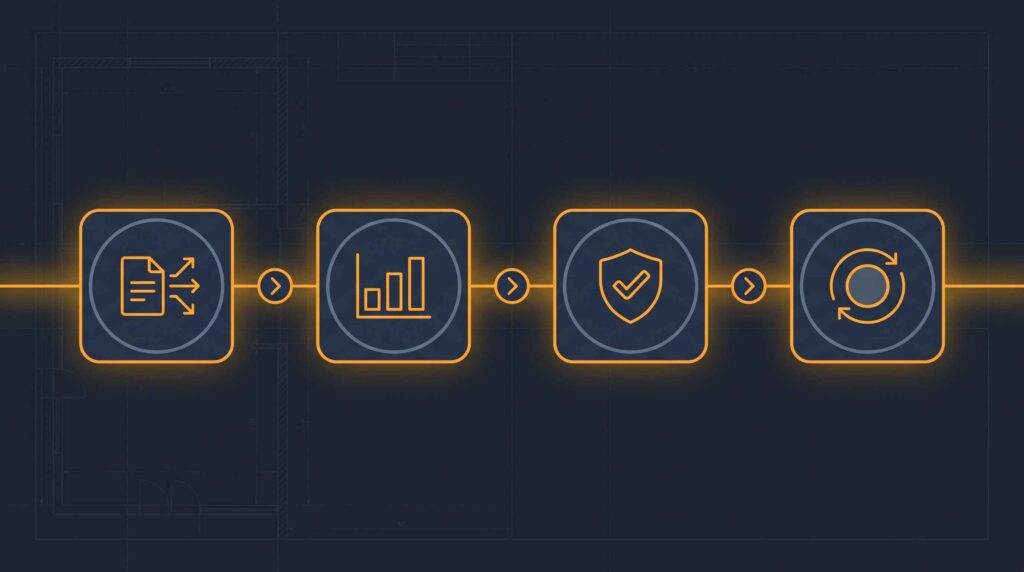

Most of us know that cyber threat intelligence (CTI) turns fragmented threat data into clear insight about attackers, their methods, and intent. It helps organisations act with purpose rather than react under pressure. For a broader overview, you can refer to the existing CTI article already published. This blog focuses on the four types of cyber threat intelligence and how they function in UK organisations.
Strategic CTI: Board-Level Direction via NCSC Annual Review
Senior leaders use strategic threat intelligence to guide long-term security decisions. From the UK perspective this can be observed by reading NCSC Annual Review in which national threats are mentioned in detail along with sector risks and emerging attack trends.
They follow a simple mechanism through which they can interpret high-level threat patterns and align them with business risk. Many organisations also rely on industry-specific threat intelligence UK sources to understand where they stand.
As an output of this practice a clear direction is provided to board members who can make informed decisions on budgets, supplier risk, and resilience planning. This strategic CTI keeps security aligned with business priorities.
Tactical CTI: Security Team Alignment via MITRE ATT&CK
Security teams use tactical cyber threat intelligence to understand how attacks actually happen. They utilise MITRE ATT&CK framework to map attacker behaviour and take necessary actions to implement defensive controls.
Techniques that are being used during this process can uncover how attackers move, escalate access, and stay hidden. This provides the teams a practical way of experiencing the threats otherwise they remain in a grey area and can not design any mitigating strategy.
With this strong detection method, teams can refine SIEM rules, improve coverage, and align defences with real attack methods. This is where theory becomes actionable cyber threat intelligence.
Operational CTI: Incident Response Readiness via NCSC Early Warning Service
Incident response teams rely on operational threat intelligence for early visibility of active threats. The NCSC Early Warning Service provides alerts on suspicious activity, exposed systems, or compromised data.
This connects external intelligence with internal risk signals. It allows teams to act before an issue becomes a full incident.
The output is faster response. Teams can isolate systems, patch vulnerabilities, and reduce impact quickly. Operational CTI shortens response time and limits damage.
Technical CTI: Automated Defence via CISP
Security engineers use technical CTI to drive automated protection. Through CISP, organisations receive structured threat intelligence data such as malicious IPs, domains, and file hashes.
This data feeds directly into EDR and SIEM systems. The process is automated and continuous.
The output is immediate action. Threats are blocked, flagged, or contained without manual effort. Technical CTI ensures defences move at machine speed.
Why All Four Types Must Integrate
These four types of CTI can not be considered separately because they are the parts of one system. They can be considered as a military intelligence where strategy sets direction, tactics define execution, operations track active threats, and technical controls act instantly.
It is important to integrate all the CTI types because failing to do so can result in a vague strategy. With the proper execution further gaps can be identified that can be fixed in a run time.
A strong cyber threat intelligence framework UK organisations adopt connects all four. So when the scattered data is used in an organised way it can be used for making decisions and driving actions to implement a coordinated defence.
Conclusion
The types of cyber threat intelligence each serve a specific role but their actual worth is to use them all at once. Organisations that integrate all four can make decisions and stronger resilience against any threat.
If your current setup feels fragmented, then you should consider reviewing it now. A focused CTI maturity assessment or a cybersecurity advisory conversation can help identify gaps and bring your intelligence programme in line with business needs.