Having an understanding of Monolithic vs Microservices vs Serverless architecture can help the UK businesses to build resilient and scalable cloud applications. To remain competitive in the modern digital world it is important to choose the right cloud architecture that impacts performance, cost and overall success in a longer run.
Why Architecture Choice Matters for Your Cloud App
The initial decision to choose between the right software architecture is crucial because it can impact the team autonomy and resilience of the team in future. A quick and simple approach to launch an app is to go with the monolithic architecture; however, modern enterprises often require scalable software architecture patterns that support rapid growth. Similarly, Cloud-native application architecture provide flexibility related to
on-demand scalability and operational efficiency that help businesses to innovate without being held back by legacy constraints.
Monolithic Architecture: Simplicity With One Big Build
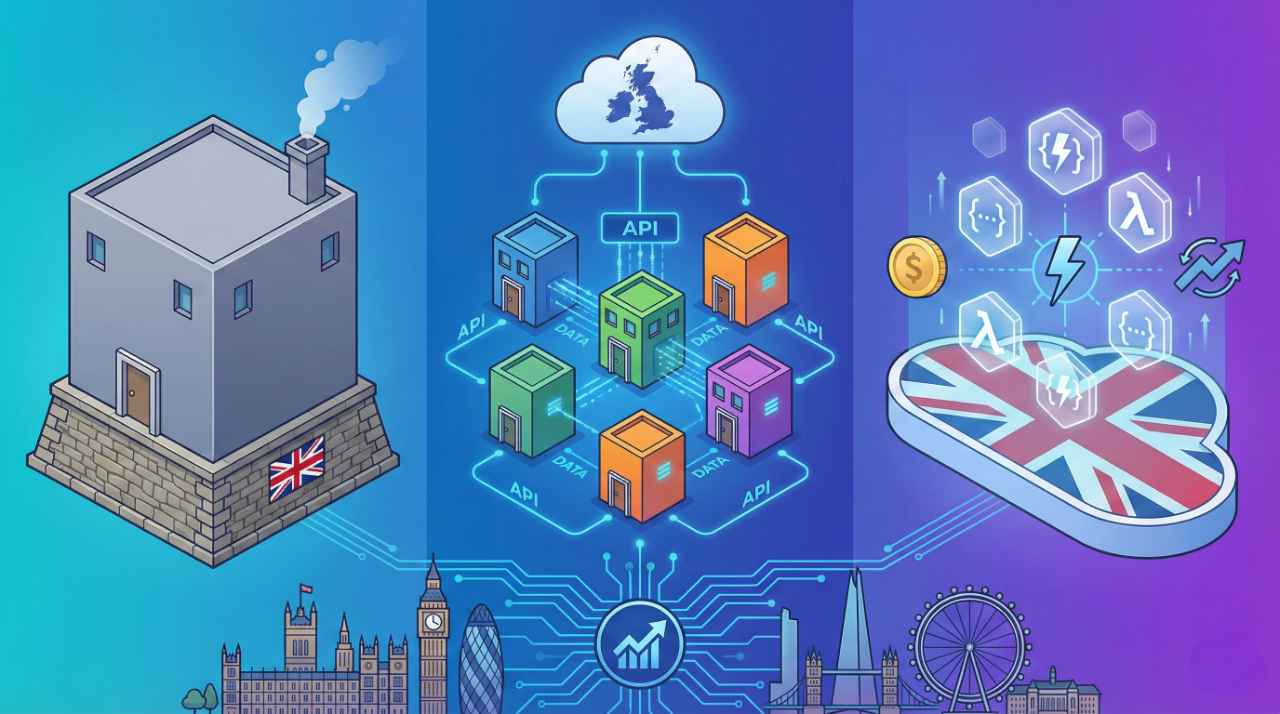
Most of the businesses that are upgrading their traditional system prefer monolithic application migration strategy because of its simplicity. Different components are tightly coupled in the monolithic model which simplifies the initial development and testing phase. But the drawback with this system is that the team has to face the longer deployment cycles and interdependencies issues during the system update. So the simplicity of this architecture provides the limited scalability for users.
Microservices Architecture: Modular and Enterprise-Ready
Applications that are running on microservices architecture for enterprise environments act as independent services that communicate through APIs. Teams that are following an agile approach where the release cycles are faster can take the maximum advantage. The reason is that the teams don’t have to wait for the completion of redeployment of the entire system.
Microservices vs monolithic pros and cons clarifies that microservices offer enhanced scalability through fault isolation and deployment flexibility.
Serverless Architecture: On-Demand and Cost Efficient
Serverless architecture benefits for businesses which are looking for low operational overhead with automated scaling. In this scenario, developers can focus on their core coding skills instead of worrying about the servers.
If we look into the Serverless vs microservices cost comparison we can find that serverless architecture is a better choice for sporadic workloads because of low cost and operational efficiency.
Legacy Modernisation: Moving to the Cloud With Purpose
For organisations dealing with legacy application modernization UK, the shift to cloud-native architecture delivers sustained value through reduced technical debt. Modernising a monolithic legacy system into microservices or a serverless design can seem daunting, but the payoff is a flexible foundation capable of supporting business growth.
Comparing Patterns: What Fits Your Business Needs?
When weighing Cloud application design patterns for your business the major things to consider are workload characteristics, team expertise, and long-term strategy. Monolithic architecture is suited for small teams and straightforward applications. Whereas, microservices suit businesses who are seeking modularity and scalability across distributed teams. Serverless can be a game changer for event-driven workloads or functions with intermittent traffic.
Operational and Financial Considerations in Cloud Architectures
Beyond technical traits, operational and financial factors play a decisive role while finalizing the software architecture. Having a basic understanding of each of these models helps leaders to plan budgets and allocate resources wisely. Although the technical complexity increases with the adoption of microservices architecture, it can reduce long-term maintenance costs through decoupled services. Conversely, in serverless platforms the cost factor is shifted to the usage patterns and reduces the budget leakage but with proper governance.
Key Takeaways for UK Business Leaders
Choosing between Monolithic vs Microservices vs Serverless isn’t about a one-size-fits-all decision but depends on the number of factors. Before designing the final architecture of software, the organizations need to assess themselves against distributed systems, cloud-native practices, and changing market needs. A strategic fit between organizational goals can help you achieve better value from investing in the cloud.
Conclusion: Make an Informed Architecture Choice
Understanding the strengths and trade-offs of monolithic, microservices, and serverless architectures empowers UK businesses to build applications that are beneficial in the longer run. With a growing cloud adoption it is critical to select the right model that supports product vision to enhance competitiveness and innovation. Evaluate your goals, team skills, and workload wisely before beginning your cloud journey. This could also be done through connecting with a cloud strategy expert who can tailor an approach that drives your business growth with the right choice.