Introduction
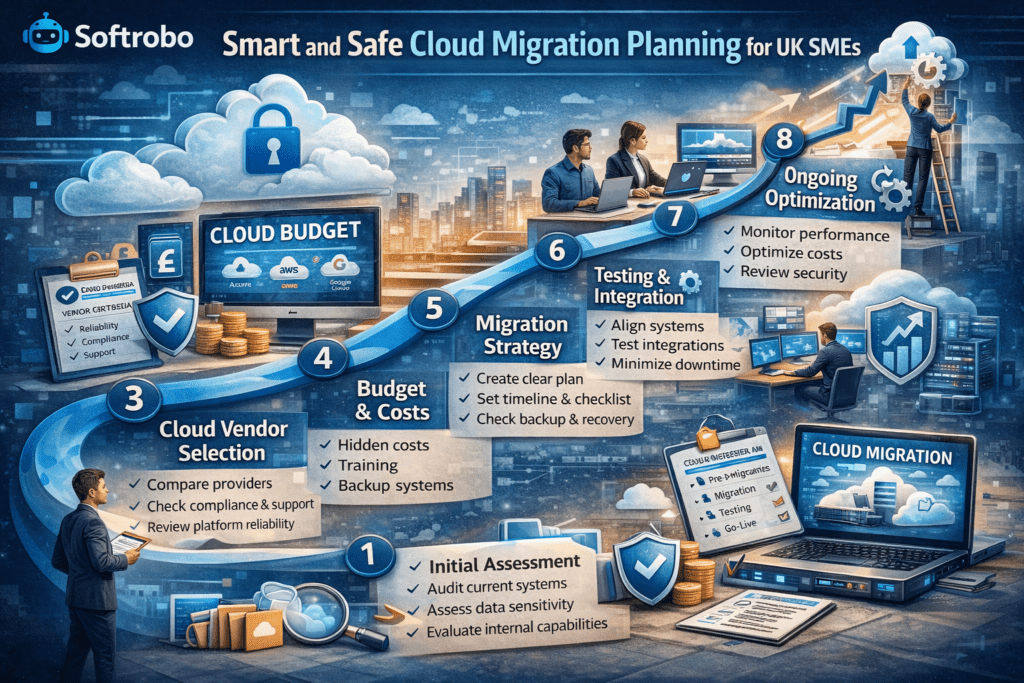
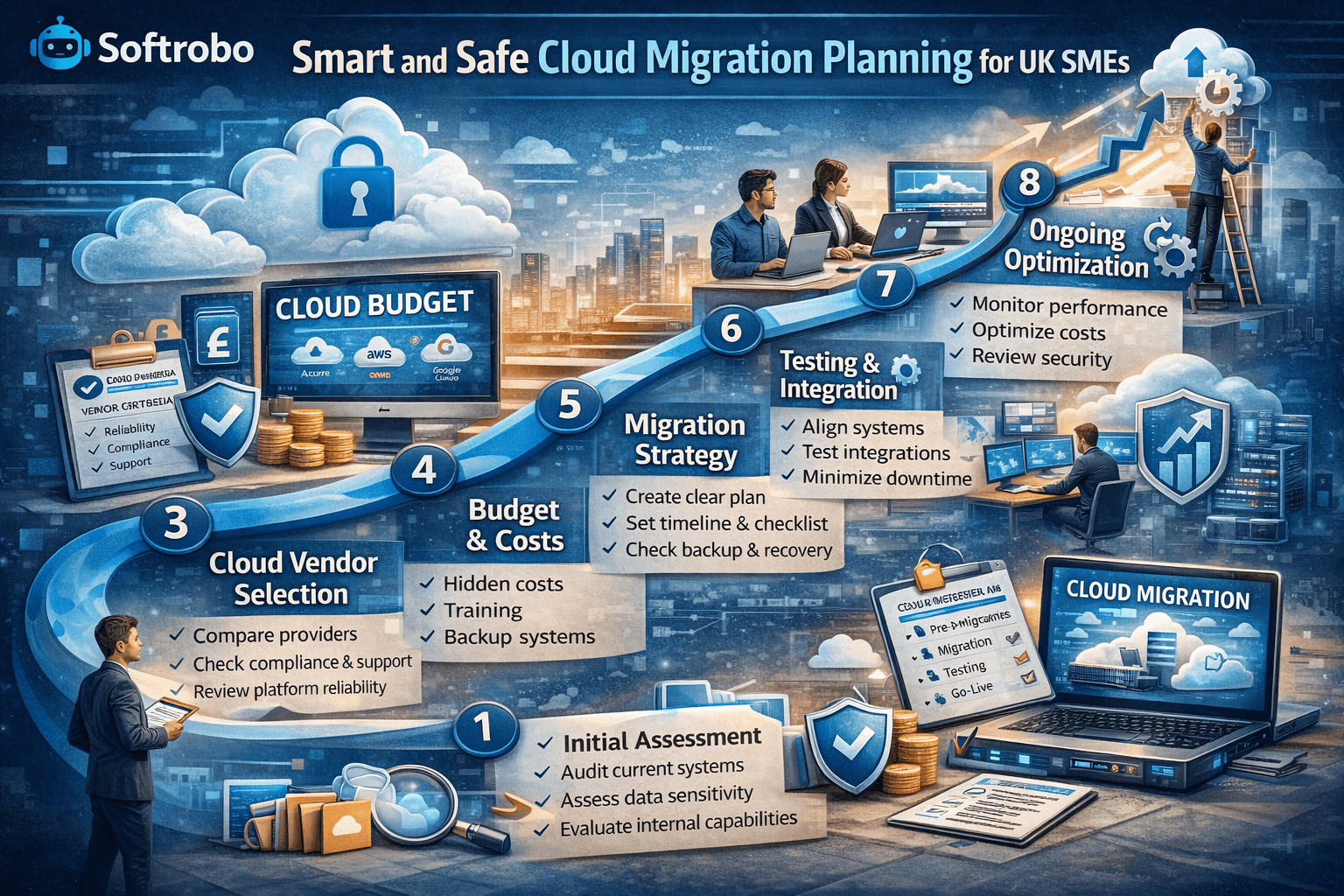
One of the first steps towards a digital transformation for businesses is cloud migration planning UK SMEs. Today every business is ambitious enough to remain competitive in their domain so that it can compete within their domain. Small and medium sized businesses can become more agile, scalable and resilient by adapting to cloud technology. The planning phase of cloud migration must cover the safety and budgeting aspects so that the business can continue its normal operations.
By working in a non-structured manner, there could always be loopholes in security, additional costs, and disruptions in routine work for SMEs. However, with a smart plan, cloud computing adoption should fortify the organization and not create any additional risks.
Cloud migration planning UK SMEs
Without having a clear understanding of the basic steps of cloud migration and its implications afterwards, companies would not be able to optimize their operational goals. With cloud migration planning UK SMEs can set clear objectives related to technological decisions and business outcomes.
Planning will also involve assessing current systems, data sensitivity, and internal capabilities so that migration decisions are based on facts rather than assumptions.
Safe cloud migration
Safe cloud migration for SMEs can only be possible by strictly following the security principles right from the planning stage. Instead of including the security features after finalizing the strategy, it must be included from design to deployment phase.
By identifying data classification, access requirements, and compliance needs early, SMEs reduce the risk of breaches and regulatory exposure during transition.
Cloud adoption for UK small businesses
If anyone thinks that cloud adoption for UK small businesses is just about selecting the platform then they will soon find themselves stuck in the bottleneck. A company that is migrating towards the cloud infrastructure must be fully aware of its internal culture. The adoption of cloud services may alter the daily operations of the company so the senior leadership must be able to take ownership of its implementation.
When leadership and staff understand the benefits and responsibilities of cloud usage and align on the same SOPs then the adoption becomes smoother and long-term value can be maximised.
Cloud migration checklist UK
The SMEs can handle the complex projects by preparing a cloud migration checklist UK to make sure every step should be followed. This checklist will help the company to make its current processes aligned with the migration protocols to reduce surprises and also create confidence among stakeholders.
Cloud security
The best way to protect business data and maintain trust among stakeholders is to apply cloud security best practices UK. This include:
a. Effective identity management
b. Encryption
c. Regular security review
This means SMEs have to introduce standardized security frameworks that are responsible for providing identical levels of security without extensive in-house security staff.
Transition planning
The transition to cloud systems should be done without any operational disruption. So the cloud transition planning for SMEs should clearly define the migration process, relevant testing scenarios and how systems are switched over to keep running the business functions.
Clear timelines and fallback procedures help businesses maintain stability while gradually introducing cloud services.
Business continuation
One of the main challenges for the SMEs is business continuity during cloud migration. This could have also become a pain point for most of the SME leaders. One minute downtime can result in shaken customer trust and revenue specially for the businesses with limited options.
By staggering migrations and retaining temporary parallel systems, SMEs can continue operating while cloud environments are validated.
Investment for cloud migration
It is important to have knowledge related to the cost of cloud migration UK because ignoring this aspect could lead to budget overruns and unrealistic expectations. Most of the time the business owners only have the subscription costs in their mind. In reality the hidden expenses include secure data transfer, staff training, integration and inclusion of temporary backup systems.
Cloud integration UK SMEs
Effective cloud integration UK SMEs requires that cloud services work seamlessly with existing tools and workflows. In case of poor integration, companies can experience a data loss due to data silos whereas, thoughtful integration planning ensures business continuity across the platform.
Risk assessment and planning
Risk evaluation is a core element of cloud migration planning UK SMEs, through which businesses can identify vulnerabilities before the actual migration process begins. Proactive risk planning reduces the likelihood of security incidents and supports smoother project delivery.
Data governance strategy
Proper data governance will ensure safe cloud migration for SMEs businesses into the advanced system, since data ownership, retention, and control issues are clearly defined. This is important in organizations within regulated sectors.
Vendor and platform selection
Selecting the right provider influences every aspect of cloud migration planning UK SMEs. Every aspect of the platform like reliability, compliance alignment, and customer support should be evaluated before finalizing the vendor. A well-chosen vendor becomes a strategic partner rather than just a service provider.
Long-term optimisation strategy
Cloud success does not end at migration, making optimisation a vital part of cloud computing for small businesses UK. It is important to regularly analyse the unused resources, security improvements and performance enhancements so that the cloud adoption remain cost-effective and valuable over time.
Conclusion
Smart and secure cloud migration planning UK SMEs requires striking a balance between leveraging an opportunity and discharging responsibility. Organizations that take a strategic approach to the cloud migration process have better chances of successfully adopting the cloud service. Hence, if you are the one who is looking out for the digital transformation process, then the time is right to measure the readiness of this process.